Locked Out at 3am in Arlington: 24/7 Emergency Locksmith Cost 2026
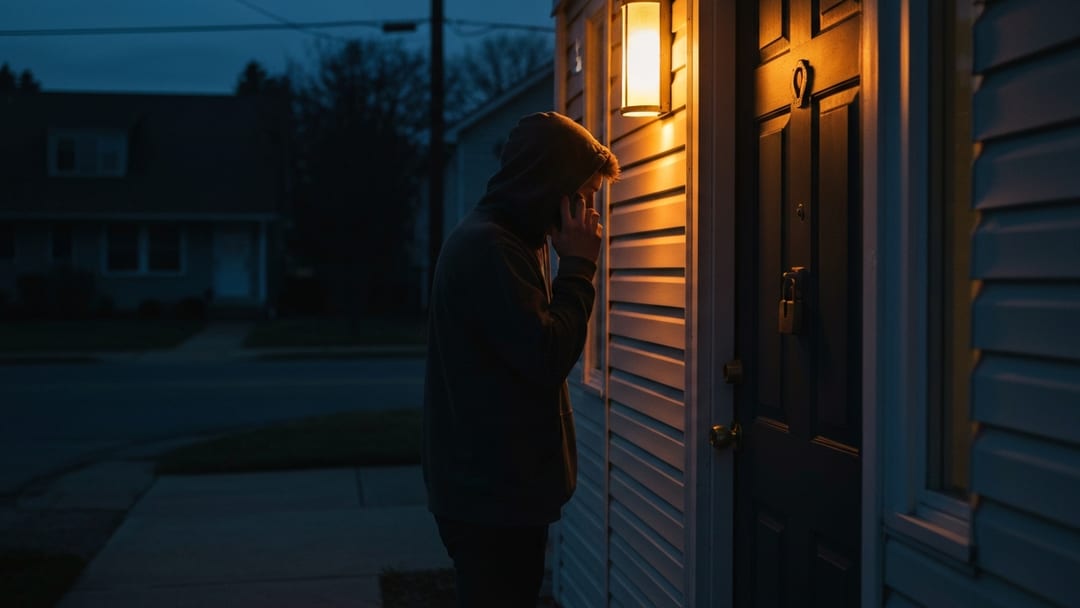
Quick answer: As of July 2026, an after-hours emergency lockout in Arlington is priced as a base service call plus a night or holiday surcharge — typically $120–$250 all-in for a late-night opening — quoted in full before the van rolls. Arlington TX Locksmith states that total up front; call or text (817) 330-5762. Get the all-in total on the phone and in writing — the U.S. Federal Trade Commission warns that a quote far below the going rate is the classic sign of a lockout bait-and-switch. Skilled lock work has a real labor cost the U.S. Bureau of Labor Statistics tracks publicly, so a "$15 lockout" advertised at 3am is the warning, not the deal.
The short version: what an after-hours lockout should cost
Getting locked out at 3am in Arlington is stressful, and that stress is exactly what a dishonest operator counts on. The pricing itself is not complicated. An honest after-hours lockout is a base service call — the cost of sending a trained technician to your door with the right tools — plus a clearly stated surcharge for the night or holiday hour. That is it. You should hear one all-in number on the phone before anyone is dispatched, and that number should not change when the van arrives.
The reason this matters is that lock work has a real, documented labor value. The U.S. Bureau of Labor Statistics tracks locksmiths and safe repairers as their own occupation, SOC code 49-9094, and publishes the wages that go with it. When you see that public baseline, the math behind a "$15 lockout" sign falls apart immediately: nobody pays a skilled technician to drive out to Arlington at 3am for fifteen dollars. The low number is bait. The real bill comes later, at the door, after the work is done and you are in no position to argue.
So the first rule of an overnight lockout is the simplest one: refuse any job that will not name a firm, all-in price before the technician arrives. Whether you need an emergency lockout service for a home, a car, or a business, the up-front number is the test of whether you are dealing with an honest operator.
There is no single posted "menu price" for an Arlington lockout, and any site that claims one is guessing. What is stable is the shape of the bill: a base service call plus an after-hours surcharge, with separate, clearly-named line items only if the job grows beyond a simple opening. The dollar amount moves with the hour, the type of lock, and how far the technician has to drive — but the structure does not. Once you understand that structure, you can evaluate any quote you are given on the phone in about ten seconds, which is the whole point of reading this before you are standing on a dark porch.
What a lockout typically runs by time of day in Arlington (2026)
These are typical all-in ranges for a straightforward opening in the Arlington / DFW area in 2026 — not a posted menu. Lost keys, rekeys, extractions, and repairs are separate, clearly named line items on top of the opening itself.
| Time of call | Typical all-in lockout range |
|---|---|
| Daytime (8am–6pm) | $75–$150 |
| Evening (6pm–10pm) | $90–$175 |
| Overnight (10pm–6am) | $120–$250 |
| Major holidays | $150–$300 |
If a phone quote lands far below these ranges, treat it as the bait the FTC describes — the difference gets added back at the door, after the work is done.
Why night and holiday rates exist (and why that is fair)
A surcharge for overnight or holiday service is not a gouge — it is the honest cost of pulling a technician out at a low-demand hour. During the day, a mobile locksmith can chain several jobs together across Arlington: a lockout near the Parks Mall, a rekey in the UTA area, a lock repair off Cooper Street. At 3am there is one call, one driver, and a long quiet stretch on either side of it. The surcharge covers that reality.
The key distinction is disclosure. A reputable Arlington locksmith states the night or holiday surcharge clearly before you agree to anything, so the total you hear on the phone already includes it. A scam operator does the opposite: quotes a daytime base rate to win the call, then adds "emergency," "after-hours," and "drilling" fees once the technician is standing at your door. The Federal Trade Commission specifically warns consumers to get an estimate in writing and to be wary of a price that seems too good to be true, precisely because this springing-the-surcharge pattern is so common.
There is also a labor-market reality behind the rate. Because the Bureau of Labor Statistics publishes locksmith wage data, anyone can see that this is skilled work with a recognized pay scale. A business that pays its technicians a fair wage and runs a stocked mobile van cannot survive on novelty pricing. When a price is far below what trained labor costs, something else is paying for the difference — usually you, in inflated charges added after the fact.
It is worth being concrete about why the hour costs more. An overnight call ties up a single technician and a fully stocked van for one job, with no opportunity to batch it against the next. The drive is the same length whether it is noon or 3am, but at 3am there is no second or third job nearby to share that drive against. A fair surcharge simply prices that exclusivity honestly, in advance. What is never fair is hiding it: the difference between a legitimate Arlington locksmith and a bait operator is not whether a night rate exists — it is whether you heard the night rate before you said yes, or after the door was already open.
The four red flags of a lockout scam
Lockout scams follow a script, and once you know the script you can spot it from the first phone call. The Federal Trade Commission has documented the pattern in its consumer guidance, and four signals stand out.
First, the price balloons. A quote of a few dollars over the phone becomes hundreds at the door once "extra" fees are stacked on. Second, there is no company name — the technician arrives in an unmarked car, the invoice has no business name, and the person cannot tell you which company actually dispatched them. Third, drilling is the first resort. A trained locksmith can open the vast majority of residential and automotive locks without destroying them; an operator who immediately reaches for a drill is either unskilled or running up the bill. Fourth, the demand is cash only, often with no itemized receipt.
Any one of these is a reason to stop the work. Texas regulates locksmith companies through the Department of Public Safety Private Security Program, so a legitimate operator works inside a recognized state framework — not as an anonymous number that appears at the top of a search result at 3am. If a technician cannot give you a real company name and a written, all-in price, the safe move is to not let the work begin.
A useful tell, once the technician arrives, is how they approach your lock. Drilling out a standard residential deadbolt should be a last resort, used only when a lock is already damaged or a high-security cylinder genuinely cannot be picked — not the opening move on an ordinary door. The Associated Locksmiths of America frames non-destructive entry as the mark of a skilled technician, because picking and bypassing a lock preserves the hardware you already paid for. When someone reaches for the drill in the first thirty seconds, they are usually either undertrained or building a reason to charge you for a replacement cylinder you did not need.
How to lock in an up-front price before the van rolls
The protection against every one of the red flags above is the same thing: a firm price agreed on the phone. When you call, give the dispatcher the basics — are you locked out of a house, a car, or a business; what part of Arlington you are in; whether your keys are simply inside or actually lost. With that, an honest locksmith can quote the base service call plus any night or holiday surcharge as a single all-in number, and give you a live ETA.
Confirm three things before you say yes. One: the total, including the after-hours surcharge, not a daytime base rate. Two: that the price is good on arrival and will not change unless the job itself changes — for example, if a lockout turns out to need an emergency rekey service because the keys are lost rather than locked inside. Three: that you will get it in writing, which the FTC names as the single most protective step a consumer can take.
Arlington is a large, spread-out city — one of the biggest in Texas by population per the Census Bureau — so dispatch distance is a genuine variable in your ETA. A technician coming from the I-20 corridor to far north Arlington near the Entertainment District is a different drive than one already nearby. That is exactly why a live ETA beats a vague promise: it reflects where the nearest available technician actually is, at 3am, in real traffic. Ask for the number, get it in writing, and you have turned the most stressful part of a lockout into a known quantity.
If you can, write down or screenshot the quote the moment you get it. A name, a number, and a total — even captured in a text message back to the dispatch line — turns a verbal promise into the written estimate the FTC recommends. It also gives you something concrete to point to if a technician arrives and tries to revise the figure upward. Honest operators have no problem putting a number in writing because they intend to honor it; the ones who balk at writing it down are telling you, before they ever arrive, which kind they are.
What you are actually paying for
It helps to know what the service call buys. A mobile locksmith arrives with a stocked van: pick sets and bypass tools for non-destructive entry, key-cutting equipment, blank keys and cylinders, and the training to use all of it without damaging your property. The base service call covers the dispatch, the drive, and the standard entry. The night or holiday surcharge covers the hour. If the job changes — a broken key has to be extracted, a damaged lock needs repair, lost keys mean the locks should be rekeyed so the missing key cannot be used — those are separate, clearly-priced add-ons, not surprises.
This is also why fabricated low quotes are so damaging. A burglary-related lockout is a good example: a homeowner returning to a broken-into house at night is exactly the kind of vulnerable caller a scam targets. The honest path is straightforward — open the door, assess whether the keys are compromised, and rekey if needed, all at prices stated up front. The dishonest path uses the emergency to justify whatever number the operator decides on once inside.
The bottom line for Arlington at 3am: the cost of an emergency lockout is knowable before anyone touches your lock. Get the all-in price, get it in writing, and treat a too-good-to-be-true number as the warning the FTC says it is.
Common 3am scenarios in Arlington — and what each one runs
The word "lockout" covers several genuinely different jobs, and the situation you are in shapes the honest price. A straightforward residential lockout — you stepped outside, the door swung shut, and the keys are sitting on the counter — is the simplest case: a base service call plus the after-hours surcharge, and you are back inside. A car lockout with the keys visible on the seat is structurally the same, though the tools differ. Neither should turn into a major bill unless something else is going on.
It gets more involved when keys are lost rather than merely locked away. If you cannot find your house keys at all after a night out near the Entertainment District, opening the door is only step one — the responsible follow-up is rekeying the exterior locks so the missing key, wherever it is, can never be used. That is a larger, separately-priced job than a simple opening, and an honest technician will explain the difference rather than fold it into one vague "emergency" number. The same logic applies to a snapped key in the lock, which becomes a broken key extraction, or a deadbolt that was forced and needs lock repair.
Knowing which scenario you are in before you call lets you sanity-check the quote. If you describe a simple keys-on-the-counter lockout and the dispatcher quotes a number that sounds like a full hardware replacement, that is a mismatch worth questioning. If you describe lost keys and the quote covers only the opening with no mention of rekeying, the operator is either cutting a corner or planning to upsell at the door. The match between the scenario you describe and the price you are quoted is itself a signal of whether you are dealing with a straight shooter.
Across all of these, the constant is disclosure before dispatch. Arlington has no shortage of legitimate mobile locksmiths who will tell you exactly what your specific 3am situation costs, all in, before they put the van in gear. The few that will not are the ones the Federal Trade Commission has been warning consumers about for years. The single habit that protects you — at 3am, half-asleep, on a cold porch — is to insist on that all-in number first, and to walk the moment anyone refuses to give it.
"Get an estimate in writing before you agree to any work, and be wary of a price that seems too good to be true."
— U.S. Federal Trade Commission, Consumer Advice — Avoiding Locksmith Scams
Sourced statistics
- The U.S. Bureau of Labor Statistics tracks locksmiths and safe repairers as a distinct occupation (SOC 49-9094), publishing national and state wage data that establishes a public floor for what skilled lock work is worth. — U.S. Bureau of Labor Statistics (OEWS) (2024)
- The Federal Trade Commission identifies a too-good-to-be-true phone quote that balloons on arrival as a defining feature of locksmith scams reported by consumers. — U.S. Federal Trade Commission — Consumer Advice (2023)
- Arlington is among the largest cities in Texas by population, according to U.S. Census Bureau QuickFacts, which means a high overnight call volume and real dispatch distances across the city. — U.S. Census Bureau (2024)
- Texas regulates locksmith companies through the Department of Public Safety Private Security Program, so a legitimate operator works under a recognized state framework rather than as an anonymous overnight number. — Texas Department of Public Safety, Regulatory Services Division (2024)
Related services
- emergency lockout service
- house lockout service
- car lockout service
- emergency rekey service
- Arlington service areas
Frequently asked questions
How much does a 24/7 emergency locksmith cost in Arlington at night?
An after-hours lockout in Arlington is priced as a base service call plus a night or holiday surcharge, with the all-in total quoted up front before the technician starts work. Always confirm the full price on the phone, not after arrival.
Why is a nighttime lockout more expensive than a daytime one?
Overnight and holiday calls carry a surcharge because they pull a technician out at low-demand hours. A reputable Arlington locksmith states that surcharge clearly before dispatch rather than springing it on you at the door.
What are the warning signs of a locksmith scam?
The FTC flags a too-good-to-be-true phone quote that balloons on arrival, refusal to give a written estimate, no company name on the vehicle, and demands for cash only. If any of these appear, do not let the work begin.
Can I get a firm price before the locksmith arrives in Arlington?
Yes. A trustworthy Arlington locksmith gives you a live ETA and an up-front, all-in price on the phone before the van rolls, with no surprise emergency surcharge added to a quote you already accepted.
Is a "$15 lockout" advertised at 3am a good deal?
No. Skilled lock work has a real labor cost that the U.S. Bureau of Labor Statistics tracks publicly, so an extremely low advertised price is bait. The real charge is added at the door, which is the exact bait-and-switch pattern the FTC warns about.
Sources cited
- U.S. Federal Trade Commission — Consumer Advice — Avoiding Locksmith Scams (2023)
- U.S. Bureau of Labor Statistics (OEWS) — Occupational Employment & Wages, 49-9094 Locksmiths and Safe Repairers (2024)
- Associated Locksmiths of America (ALOA) — Find a Locksmith / Professional Standards (2024)
- Texas Department of Public Safety, Regulatory Services Division — Private Security Program — locksmith company licensing (2024)
- U.S. Census Bureau — QuickFacts — Arlington city, Texas (2024)
Locked out right now in Arlington?
Arlington TX Locksmith answers around the clock with a live ETA and one all-in number before the van rolls — no surprise surcharges at the door. Call or text (817) 330-5762 — texting your location and what you are locked out of gets you a fast, firm quote, even at 3am.